

Muck vs. Mud: How to Restore a Firm Bottom to Your Recreational Pond
If you're sinking to your knees, your pond is suffocating. There is a huge difference between healthy mud and dead muck. Learn how to oxygenate your pond floor and get your firm bottom back.
The accumulation of organic sediment at the base of a recreational pond is a predictable biological consequence of nutrient loading and insufficient gas exchange. While many pond owners use the terms muck and mud interchangeably, they represent two distinct geological and biological states. Mud typically consists of inorganic mineral components such as sand, silt, and clay, which provide a stable and firm substrate. Muck, however, is a sapric organic soil comprised of partially decomposed plant material, fish waste, and leaf litter that has failed to fully mineralize.
Understanding the transition from a firm mineral bottom to a soft, anaerobic muck layer is critical for maintaining water quality and structural integrity. When organic matter enters a pond, it settles into the benthic zone. In a healthy system, aerobic bacteria and macroinvertebrates utilize dissolved oxygen (DO) to oxidize this material into carbon dioxide and water. In a suffocating system, the rate of organic input exceeds the rate of oxygen delivery, leading to anoxia and the accumulation of what is technically known as sapropel—a glossy, black, watery organic sludge.
Muck vs. Mud: How to Restore a Firm Bottom to Your Recreational Pond
The distinction between muck and mud is defined by the ratio of organic to inorganic matter. Healthy pond mud is primarily composed of weathered rock particles. These particles have high density and low porosity, resulting in a firm surface. Muck is an accumulation of organic carbon that has not been processed by the pond’s biological systems. It is characterized by its high water content, low density, and the presence of hydrogen sulfide gas (H2S), which produces a distinct rotten-egg odor.
Muck exists because the biological oxygen demand (BOD) at the sediment-water interface is higher than the available oxygen supply. In most unmanaged ponds, the bottom few inches of water become anoxic, meaning they lack oxygen. Without oxygen, the efficient aerobic bacteria die off and are replaced by anaerobic bacteria. These anaerobic organisms are significantly less efficient, decomposing organic matter at a rate approximately 20 to 30 times slower than their aerobic counterparts.
This slow decomposition rate causes a "compounding interest" effect of waste. Each year, more organic material—leaves, grass clippings, and dead algae—is added to the pile than can be removed by anaerobic processes. Over a decade, this can result in two or more feet of soft, unstable sediment. Restoring a firm bottom requires shifting the benthic environment from an anaerobic state back to an aerobic state to facilitate rapid mineralization of the organic fraction.
Mechanisms of Organic Decomposition and Benthic Stabilization
Restoring a pond floor involves a combination of mechanical, chemical, and biological processes. The primary goal is to oxidize the carbon-based muck so it can be converted into gas (CO2) and released from the system, leaving behind the firm, inorganic mineral base.
Aerobic Oxidation Pathways
Aerobic decomposition is a high-energy process where bacteria use oxygen as the terminal electron acceptor. The chemical equation for this process is typically represented as C6H12O6 + 6O2 ? 6H2O + 6CO2. This reaction is rapid and complete. Because the byproduct is carbon dioxide gas, the mass of the muck literally disappears as it is "breathed" out of the pond.
For this process to function at peak efficiency, the dissolved oxygen levels at the sediment-water interface must remain above 2.0 mg/L. Ideally, a concentration of 5.0 mg/L or higher is maintained to support a diverse community of benthic macroinvertebrates, such as dragonflies and water bugs, which physically shred organic matter, increasing the surface area for bacterial colonization.
The Role of Bio-Catalysts and Enzymes
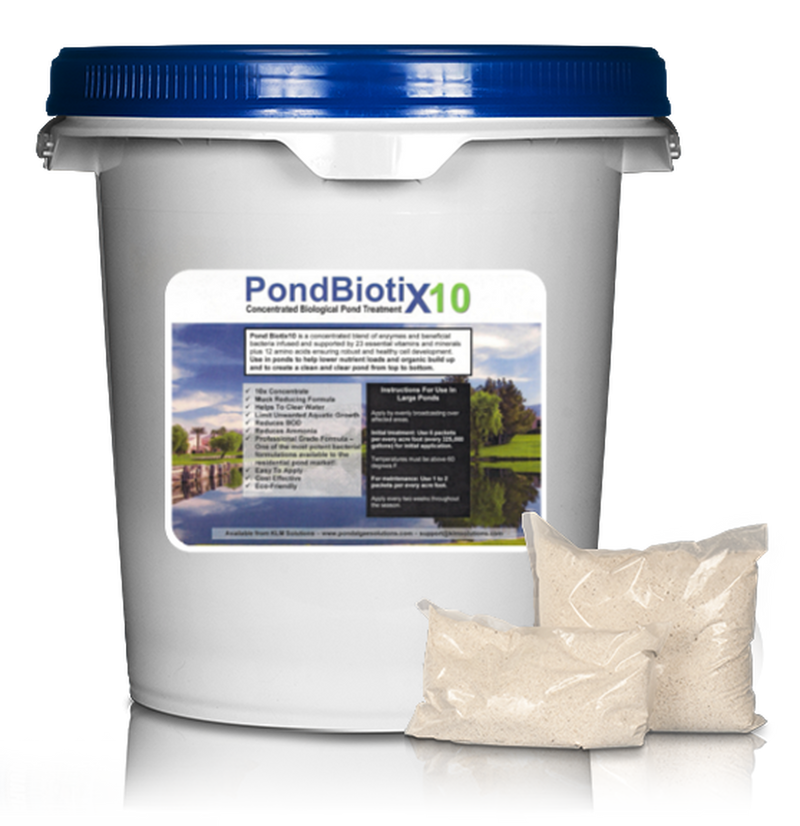
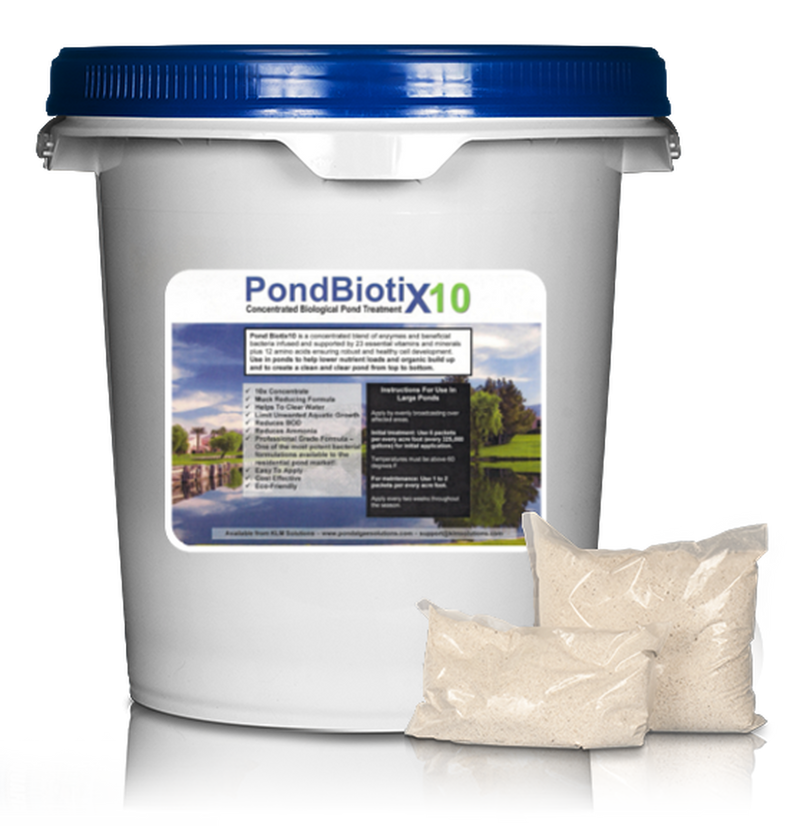
Biological remediation often utilizes pelleted bacteria and enzymes to accelerate the breakdown. These pellets are designed to sink directly into the muck layer. Once submerged, they release a concentrated dose of specialized enzymes, including:
- Protease: Breaks down complex proteins found in fish waste and animal remains.
- Amylase: Catalyzes the hydrolysis of starches into sugars.
- Cellulase: Decomposes the cellulose found in plant cell walls and leaf litter.
- Lipase: Targets fats and lipids.
These enzymes act as chemical scissors, cutting large organic molecules into smaller pieces that indigenous and added bacteria can easily consume. This process increases the efficiency of the "biological dredge" by ensuring that the most difficult-to-digest components are pre-processed for microbial metabolism.
Strategies for Oxygenating the Pond Floor
Mechanical aeration is the most effective method for delivering oxygen to the benthic zone. However, not all aeration systems are designed for muck reduction. Surface fountains, while aesthetically pleasing, often fail to move oxygen deep enough to impact the sediment-water interface in ponds deeper than six feet.
Diffused Aeration Systems
Subsurface diffused aeration uses an onshore compressor to pump air through weighted tubing to a diffuser plate located at the deepest part of the pond. As the air is released, it creates millions of tiny bubbles. These bubbles perform two functions:
1. Oxygen Transfer: Oxygen from the bubble dissolves into the surrounding water as it rises.
2. Laminar Inversion: The rising bubbles create a column of upward-moving water. This pulls cold, oxygen-depleted water from the bottom and pushes it to the surface, where it can interact with the atmosphere and pick up more oxygen.
A properly sized diffused aeration system can invert the entire volume of a pond multiple times per day. This constant mixing prevents thermal stratification and ensures that the bottom remains oxygen-rich, allowing aerobic bacteria to work 24 hours a day.
Oxygen Saturation Technology (OST)
In advanced scenarios, practitioners may utilize Oxygen Saturation Technology. Unlike standard bubblers, OST systems deliver pure oxygen directly to the bottom waters without creating massive turbulence. This allows for oxygen levels to be maintained at 8.0 mg/L or higher directly over the muck layer. High-saturation environments can penetrate several millimeters into the sediment, oxidizing the "active" layer of muck and preventing the release of sequestered phosphorus.
Benefits of Restoring a Firm Pond Bottom
Restoring the structural integrity of the pond floor provides measurable improvements to the overall ecosystem. The transition from muck to mud is not merely a change in texture; it is a fundamental shift in the pond’s chemical and biological health.
Improved water clarity is a primary benefit. Muck is easily suspended by wind, wave action, or swimming activity, leading to persistent turbidity. A firm bottom stays in place, resulting in clearer water and better light penetration. This clarity supports the growth of beneficial native aquatic plants rather than opportunistic planktonic algae.
Nutrient sequestration is another critical advantage. Muck acts as a reservoir for phosphorus and nitrogen. In anaerobic conditions, chemical bonds holding phosphorus to iron are broken, releasing a "pulse" of nutrients into the water column that fuels algae blooms. Maintaining an aerobic sediment interface keeps these nutrients "locked" in the soil, effectively starving the algae of its primary food source.
Recreational safety and enjoyment are significantly enhanced. Sinking into anaerobic muck exposes swimmers to high concentrations of bacteria such as E. coli, which has been shown to survive three times longer in muck than in sandy soil. A firm, mineral-based bottom reduces these risks and improves the aesthetic and tactile experience of using the pond for swimming or wading.
Common Challenges and Pitfalls in Muck Remediation
Remediation efforts often fail due to a lack of understanding regarding the environmental constraints of the pond. One common mistake is the over-reliance on bacterial additives without addressing the underlying oxygen deficit.
The Oxygen Debt Trap
If you add large quantities of beneficial bacteria to an anoxic pond without increasing aeration, you can inadvertently cause a "crash." As these bacteria begin to consume organic matter, they use up what little oxygen remains. This can lead to a sudden drop in DO levels, resulting in fish kills and a total halt to the decomposition process. Aeration must always be the foundation of a biological remediation plan.
Temperature and pH Constraints
Microbial activity is highly dependent on environmental variables. Most muck-reducing bacteria become dormant when water temperatures fall below 55°F (13°C). Applying pellets in late autumn or winter is often a waste of resources. Similarly, if the pond pH is outside the 6.5 to 8.5 range, the enzymatic pathways used by the bacteria may be inhibited, leading to poor performance.
Inorganic Accumulation
It is important to recognize that biological treatments only work on organic matter. If your pond is filling with sand and silt due to bank erosion or stormwater runoff, no amount of bacteria or oxygen will remove that material. In these cases, mechanical dredging is the only viable solution. A sludge depth test can help determine if the sediment is primarily organic "muck" or inorganic "mud."
Limitations of Biological Remediation
While biological dredging is cost-effective, it is not an instantaneous solution. It is a slow, steady process that requires patience and consistency.
In ponds with several feet of established muck, it may take three to five years of continuous aeration and bacterial treatment to see a significant increase in depth. If a pond is required to be deep and firm within a single season for a specific project, mechanical excavation is likely the superior choice despite the higher cost and potential for site damage.
Environmental factors like high levels of copper or other heavy metals can also limit success. Many pond owners use copper-based algaecides to control surface growth. Residual copper accumulates in the sediment and can be toxic to the very bacteria and macroinvertebrates needed to process muck. Transitioning away from chemical-heavy management is often a prerequisite for successful biological bottom restoration.
Comparison of Bottom Restoration Methods
The following table compares the primary methods for managing pond sediment based on technical and financial metrics.
| Method | Action Type | Speed | Cost Efficiency | Sustainability |
|---|---|---|---|---|
| Diffused Aeration | Physical/Biological | Moderate | High | Excellent |
| Bacterial Pellets | Biological | Slow | High | Good |
| Mechanical Dredging | Mechanical | Immediate | Low | Low |
| Suction Harvesting | Mechanical | Immediate | Medium | Moderate |
Practical Tips for Maintaining a Firm Bottom
Establishing a maintenance routine is essential for preventing the return of muck once a firm bottom has been achieved. Monitoring the pond's inputs and outputs allows for proactive management rather than reactive crisis control.
Maintain a "buffer zone" of native grasses and plants around the perimeter of the pond. This vegetation acts as a biological filter, trapping grass clippings, leaves, and fertilizer runoff before they can reach the water and contribute to the organic load. Avoid mowing directly to the water's edge.
Install a diffused aeration system that is rated for 24/7 operation. Many owners make the mistake of running their aerators only during the day or for a few hours in the evening. However, the highest oxygen demand occurs at night when plants and algae shift from producing oxygen (photosynthesis) to consuming it (respiration). Continuous aeration ensures the muck layer never enters an anoxic state.
Conduct annual muck measurements. You can do this using a "sludge judge" or a long PVC pipe marked in inches. Push the pipe down until you feel the resistance of the firm mineral bottom, then measure the thickness of the soft material above it. Keeping a log of these measurements over several years will provide objective data on the success of your remediation program.
Advanced Considerations: ORP and BOD
For those managing high-value recreational waters or aquaculture systems, monitoring Oxidation-Reduction Potential (ORP) and Biochemical Oxygen Demand (BOD) provides a deeper level of insight into bottom health.
ORP is a measure of the water's ability to cleanse itself or break down waste products. A positive ORP (measured in millivolts) indicates an oxidizing environment, which is necessary for muck reduction. Ideally, pond water should maintain an ORP between +200mV and +400mV. If the ORP falls into negative values, the system is reducing, meaning anaerobic processes are dominant.
BOD measures how much oxygen is being consumed by microorganisms in the water. A high BOD indicates a high concentration of organic matter and an overstressed system. By reducing the muck layer, you lower the BOD of the entire pond, which increases the "spare capacity" of the water to handle sudden stresses like heavy rainfall or high temperatures without experiencing a fish kill.
Examples and Scenarios in Benthic Restoration
Consider a one-acre recreational pond in a residential area that has accumulated 18 inches of soft black muck over 15 years. The owner notices a foul smell when the wind blows and finds that swimming is difficult because the water becomes "black and cloudy" immediately upon entry.
In this scenario, a technical approach would begin with installing a 1/2 HP diffused aeration system with two dual-disc diffusers placed in the deepest basins. Initial DO tests show bottom oxygen at 0.5 mg/L. After two weeks of continuous aeration, the bottom DO rises to 4.2 mg/L.
The owner then initiates a monthly application of 10 lbs of muck-reducing pellets during the peak growing season (May through September). Over the first season, the "fluff" layer of the muck begins to compact as the gases (CH4 and H2S) are released. By the end of the second year, the total muck depth has decreased from 18 inches to 10 inches, and the perimeter of the pond—where wave action provides additional oxygenation—has returned to a firm sand-and-gravel base.
Final Thoughts
Restoring a firm bottom to a recreational pond is a matter of rebalancing the carbon-to-oxygen ratio. When a pond suffocates under a layer of muck, it is losing its ability to process the organic inputs of its environment. By shifting the benthic zone from an anaerobic state to an aerobic state, you unlock the pond's natural ability to self-clean and mineralize waste.
Success requires a technical commitment to high-efficiency aeration and targeted biological supplementation. While the process is not as immediate as mechanical dredging, it is a sustainable, cost-effective way to improve water clarity, reduce nutrient-driven algae growth, and ensure a safe environment for recreation.
Ultimately, the goal is to move beyond temporary fixes and address the root cause of sediment accumulation. A healthy pond should have a firm mineral base that supports life rather than a thick layer of dead muck that threatens it. With the right systems in place, you can reclaim your pond floor and maintain a stable, high-quality aquatic ecosystem for years to come.