HOA Pond Maintenance: How to Manage Community Expectations and Costs
Stop paying for temporary fixes. Start producing a sustainable ecosystem. Most HOAs treat ponds like swimming pools—which is why they are so expensive. We show you how to manage community expectations and turn residents into stewards.
HOA Pond Maintenance: How to Manage Community Expectations and Costs
Homeowners Association (HOA) ponds are rarely just aesthetic features. In technical terms, these are Stormwater Best Management Practices (BMPs) designed to manage runoff, mitigate flooding, and sequester pollutants before they enter the wider watershed. The primary issue in community management is the "swimming pool" misconception. Residents often expect crystal-clear, sterile blue water, which is biologically impossible and ecologically damaging for a functional retention basin.
Managing a pond as a sustainable ecosystem requires a shift from reactive chemical dosing to proactive nutrient management. When a pond is treated with heavy algaecides, it creates a "kill-and-decay" cycle. The algae die, sink to the bottom, and rot, releasing the very nutrients (nitrogen and phosphorus) that fueled the bloom in the first place. This creates a feedback loop that increases maintenance costs over time while degrading the structural integrity of the pond.
Successful HOA pond management focuses on the Trophic State Index (TSI). By monitoring parameters such as chlorophyll-a, total phosphorus, and Secchi depth (clarity), a community can transition from a eutrophic (nutrient-rich and prone to blooms) state to an oligotrophic or mesotrophic state. This technical approach reduces the need for expensive "emergency" interventions and aligns the pond’s biological capacity with its mechanical requirements.
How Ecosystem Management Works: The Mechanics of Nutrient Control
The primary driver of pond degradation is nutrient loading. Nitrogen and phosphorus enter the pond via lawn fertilizers, pet waste, and decomposing organic matter. Once these nutrients exceed the pond's biological processing capacity, the system undergoes eutrophication. To reverse this, we use a three-pillar technical strategy: Aeration, Biological Augmentation, and Nutrient Sequestration.
Aeration is the most critical mechanical component. In deep ponds (over 6 feet), thermal stratification occurs, creating an anoxic (oxygen-depleted) layer at the bottom called the hypolimnion. In anoxic conditions, a chemical reaction occurs in the sediment: the iron-phosphorus bond breaks, releasing "legacy phosphorus" back into the water column. Subsurface diffused aeration systems prevent this by ensuring the water is "turned over" 1 to 2 times every 24 hours, keeping the bottom oxygenated and the phosphorus locked in the soil.
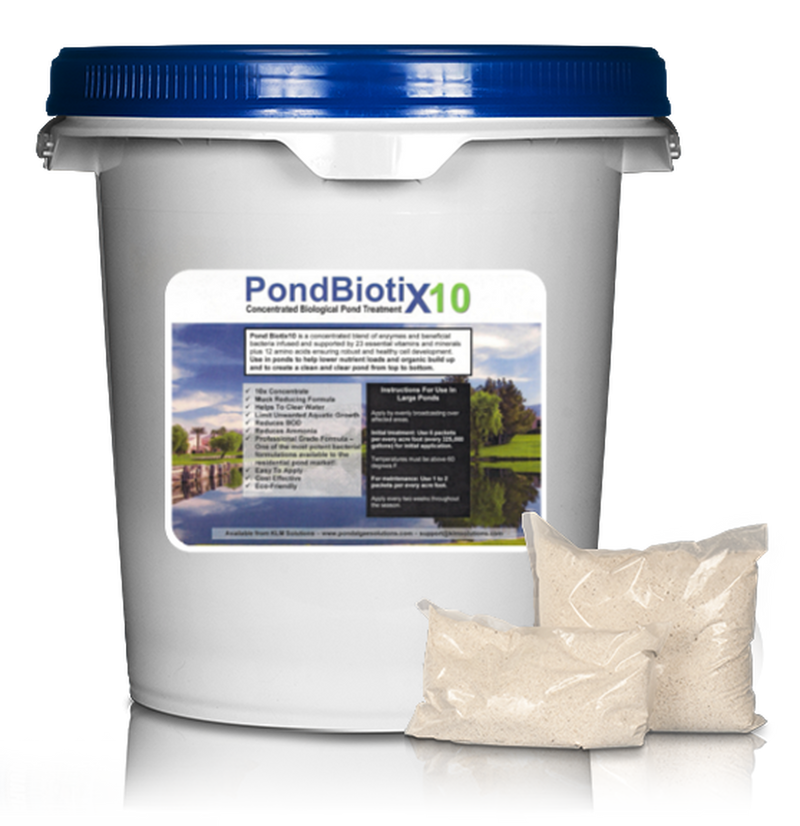
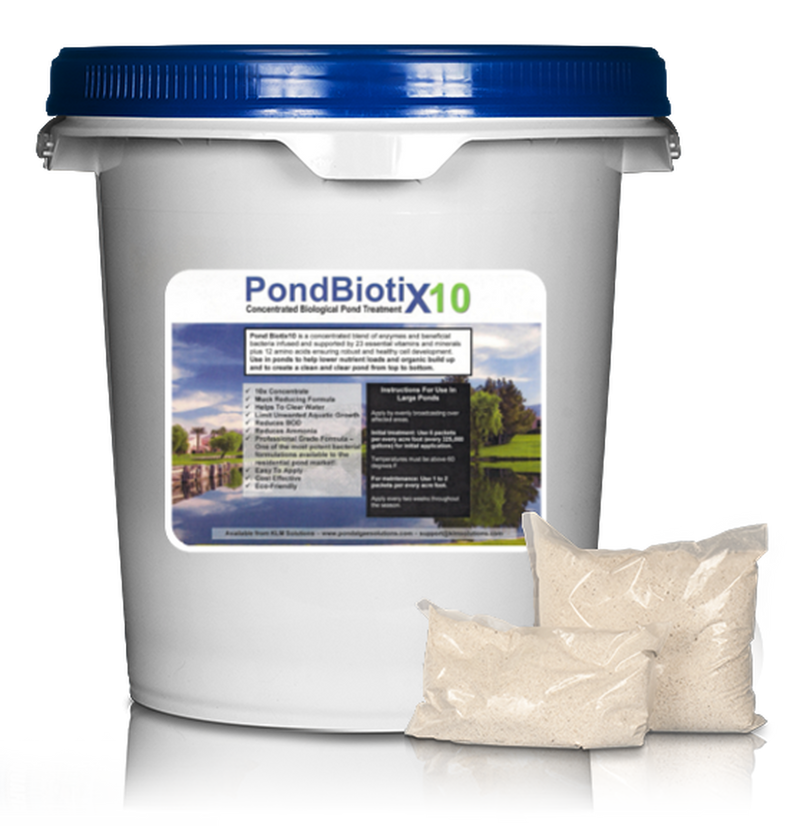
Biological augmentation involves the introduction of specific strains of nitrifying and denitrifying bacteria. These microbes consume dissolved nutrients that would otherwise fuel algae. Unlike algaecides, which address the symptom, bacteria address the source. For maximum efficiency, these treatments are applied when water temperatures are between 50°F and 80°F, allowing the colonies to establish themselves in the benthic zone.
Nutrient sequestration uses lanthanum-modified clay or alum to physically bind with orthophosphates. This process creates an insoluble mineral that sinks to the bottom and cannot be used by algae. This is a "surgical" strike against the nutrient bank of the pond, often used to reset a system that has been neglected for years. By combining these mechanical and biological tools, an HOA can produce a self-regulating system that requires minimal chemical input.
Benefits of the Sustainable Ecosystem Approach
The transition from reactive to proactive maintenance offers measurable financial and operational advantages. While chemical treatments might provide a "clear" pond for 7 to 10 days, ecosystem management provides stability over years. This reduces the volatility of the HOA's annual operating budget and prevents the sudden, massive assessments often required for emergency remediation.
- Long-term Cost Reduction: Reactive maintenance, including frequent algaecide applications and emergency fish-kill cleanups, is typically 2 to 5 times more expensive than a proactive plan.
- Deferred Dredging: By using bacteria to digest "muck" (organic sediment), an HOA can delay the need for mechanical dredging by decades. Dredging is the most expensive cost a community will ever face, often reaching six figures for a single-acre pond.
- Structural Integrity: Managing shoreline vegetation with native "buffers" prevents erosion. Erosion not only ruins the look of the pond but also fills it with silt, reducing the stormwater capacity required by law.
- Property Value: Studies indicate that well-maintained, ecologically healthy ponds can add 10% to 20% to the value of adjacent properties, whereas neglected ponds with odors and blooms become a liability.
Challenges and Common Mistakes in HOA Management
The most frequent error in HOA pond care is the "Zero-Vegetation" policy. Boards often pressure contractors to remove every weed and lily pad. This is a technical mistake. Without "beneficial" aquatic plants to compete for nutrients, the pond becomes a vacuum that is immediately filled by the most aggressive and unsightly algae species. A pond without plants is an unstable system.
Another common pitfall is the misuse of fountains. Most residents see a fountain and assume it is aerating the pond. In reality, most decorative fountains only pull water from the top 1 to 2 feet. They provide excellent aesthetics but do nothing to oxygenate the bottom sediment where the nutrient problems actually reside. Using a fountain as a primary aeration source is a mechanical inefficiency that leads to long-term muck buildup.
Failure to educate the "Complaining Resident" is a social challenge that manifests as a maintenance problem. One resident complaining about a small patch of native pickerelweed can lead to a board-ordered chemical "nuke," which then kills the vegetation, releases nutrients, and triggers a massive blue-green algae bloom two weeks later. Managing the people is as technical a task as managing the water chemistry.
Limitations and Environmental Constraints
While ecosystem management is superior for most stormwater basins, it is not a panacea. There are specific physical and chemical boundaries where biological tools fail. For instance, if a pond has a "leaky" bottom due to a failed clay liner or a punctured HDPE (High-Density Polyethylene) liner, no amount of bacteria or aeration will solve the water level issue. In these cases, civil engineering repairs are the only solution.
Environmental limitations also include heavy metal contamination. If the community's runoff contains high levels of lead, copper, or zinc from industrial sources or old infrastructure, biological augmentation may be inhibited. Microbes are sensitive to toxicity. In such scenarios, the pond must be treated as a hazardous waste containment site rather than a natural ecosystem, necessitating mechanical filtration and frequent sediment removal.
Finally, there is the "Age Limit." Every pond has a finite lifespan before the accumulation of inorganic sediment (sand and clay) reaches a point where biological digestion is impossible. If a pond has lost more than 40% of its original design depth to inorganic silt, biological "muck pellets" will not work. At this stage, mechanical dredging is a physical necessity to restore the stormwater capacity required by local regulations.
Comparison: Reactive Algaecides vs. Proactive Ecosystem Management
Choosing between these two approaches depends on the HOA's priority: immediate visual "perfection" or long-term financial stability. The following table compares the two strategies based on technical performance metrics.
| Metric | Reactive (Chemical-Heavy) | Proactive (Ecosystem-Based) |
|---|---|---|
| Primary Tool | Copper Sulfate / Herbicides | Aeration / Beneficial Bacteria |
| Initial Result | Immediate (24-48 hours) | Gradual (30-90 days) |
| Long-term Stability | Low (Frequent "Yo-Yo" blooms) | High (Self-regulating system) |
| Annual Cost Trend | Increasing (Due to resistance) | Decreasing (System stabilizes) |
| Sediment Impact | Increases muck (Organic decay) | Decreases muck (Microbial digestion) |
| Fish/Wildlife Safety | High Risk (Oxygen crashes) | Safe (Oxygen enriched) |
Practical Tips for HOA Boards and Property Managers
Implementing a sustainable plan does not require an immediate overhaul of the entire budget. Small, technical adjustments can yield significant results over a single season. The goal is to reduce the "External Nutrient Load" while increasing the "Internal Processing Capacity."
Establish a No-Mow Buffer Zone. Instruct landscaping crews to leave a 3-to-5-foot strip of tall grass or native plants around the pond perimeter. This acts as a physical filter for grass clippings and fertilizer runoff. Every pound of grass clippings that enters the water provides enough phosphorus to fuel 50 pounds of algae growth.
Optimize Aeration Run-Times. If your pond uses diffused aeration, it should run 24/7 during the summer months. Turning systems off at night is a common mistake; this is exactly when dissolved oxygen levels are at their lowest due to plant respiration. A consistent 24-hour cycle maintains the "Benthic Interface" and keeps phosphorus locked in the sediment.
Conduct Annual Water Testing. Stop guessing what the pond needs. A basic water quality panel should measure Total Phosphorus (TP), Total Nitrogen (TN), and Dissolved Oxygen (DO) at various depths. If your TP is above 30 ppb (parts per billion), the pond is at high risk for a bloom. Data-driven decision-making prevents wasting money on unnecessary treatments.
Advanced Considerations: The Benthic Flux and Oxygen Demand
Serious practitioners must understand the concept of Sediment Oxygen Demand (SOD). This is the rate at which the organic matter at the bottom of the pond consumes oxygen. In many older HOA ponds, the SOD is so high that even a standard aeration system can't keep up initially. This is where "Pulse Dosing" of oxygen-releasing compounds or high-dose bacteria is required to "burn off" the initial organic load.
Another advanced factor is the "Benthic Flux." This is the movement of nutrients from the sediment into the water. Even if you stop all fertilizer runoff, a pond can still bloom because of the nutrients stored in the muck from 10 years ago. Understanding the chemical speciation of this phosphorus—whether it is iron-bound, aluminum-bound, or organic—determines if you should use aeration, alum, or biologicals. Professional pond managers use sediment core sampling to diagnose this flux.
Example Scenario: The "Green Water" Crisis at Willow Creek HOA
Willow Creek, a community with a 3-acre retention pond, was spending $6,000 annually on copper sulfate treatments. Despite this, the pond was plagued by recurring mats of filamentous algae and a persistent "rotten egg" smell (Hydrogen Sulfide). The residents were frustrated, and the board was considering a $150,000 dredging project.
Instead of dredging, the board invested $12,000 in a bottom-diffused aeration system and a monthly biological augmentation program. In the first 60 days, clarity improved from 12 inches to 36 inches. By the end of the first year, the "muck" layer had decreased by 4 inches through microbial digestion. The annual maintenance cost stabilized at $4,000—a 33% reduction from their previous chemical-only budget—and the dredging project was deferred indefinitely.
Final Thoughts
Sustainable HOA pond maintenance is not a matter of aesthetics; it is a matter of engineering and ecology. By moving away from the "swimming pool" mentality, communities can significantly reduce their long-term liabilities and maintenance costs. The focus must remain on managing the nutrient cycle and maintaining high dissolved oxygen levels at the benthic interface.
This transition requires patience and education. It is essential to shift the culture of the community from one that demands instant chemical gratification to one that values a healthy, resilient ecosystem. When residents understand that a little native vegetation and a "fishtank bubbler" are saving them thousands of dollars in future assessments, they stop being complainers and start becoming stewards of their environment.
Experimenting with buffer zones and aeration is the first step toward a more efficient, data-driven management strategy. As the pond stabilizes, the need for intervention decreases, allowing the HOA to reallocate funds toward other critical infrastructure while enjoying a vibrant, functional water feature.