Golf Course Pond Management: Keeping Water Hazards Crystal Clear for Members
Members know the difference between 'Fake Blue' and 'Crystal Clear.' Which one is on your course? Don't just dye your ponds blue to hide the muck. Use biological systems to actually clean the water. Your members—and your budget—will thank you.
Maintaining a high-quality golf course requires more than just turf management; it necessitates the precision handling of aquatic ecosystems. Water hazards serve as aesthetic centerpieces and essential irrigation reservoirs, yet they are prone to rapid degradation due to nutrient loading. Achieving clarity involves moving beyond surface-level aesthetics and addressing the underlying biochemical oxygen demand (BOD) that dictates water health.
Golf Course Pond Management: Keeping Water Hazards Crystal Clear for Members
Golf course pond management is the technical process of regulating the biological, chemical, and physical properties of a water body to maintain clarity and prevent ecological collapse. In the context of a golf course, these ponds are often "closed" or "semi-closed" systems, meaning they lack the natural flushing mechanisms found in rivers or large lakes. Instead, they act as catch-basins for nitrogen and phosphorus-rich runoff from surrounding fairways and greens.
When fertilizers leach into a pond, they trigger eutrophication—a state of excessive nutrient enrichment. This process leads to rapid algal blooms and the accumulation of organic sludge, colloquially known as "muck." If left unmanaged, the pond shifts from an asset to a liability, characterized by noxious odors (hydrogen sulfide gas) and high turbidity. Professional management utilizes biological systems to outcompete algae and break down organic matter at the molecular level.
Visualize the pond as a biological reactor. In a healthy system, dissolved oxygen (DO) levels remain high enough to support aerobic bacteria, which efficiently digest organic waste. In a neglected system, oxygen is depleted, and the reactor switches to anaerobic digestion. This transition is where the "muck" accumulates and the water loses its transparency. Management is the act of keeping that reactor in an aerobic, highly efficient state.
How Biological Systems Stabilize Water Quality
Biological remediation relies on the optimization of the nitrogen cycle and the management of carbon-based organic matter. The process is primarily driven by bioaugmentation—the introduction of specialized bacterial strains—and aeration. These systems work in tandem to reduce the nutrient load that otherwise fuels algae growth.
Microbial action is the engine of pond clarity. Specialized bacteria, such as Bacillus strains, are deployed to target specific organic compounds. These microbes produce extracellular enzymes including protease for proteins, cellulase for plant matter, and lipase for fats and oils. By breaking these complex molecules into simpler forms, the bacteria can ingest and convert them into carbon dioxide and water, effectively "eating" the sludge at the bottom of the pond.
Aeration serves as the life-support system for these microbes. Subsurface diffused aeration is the most efficient mechanical method for maintaining dissolved oxygen throughout the water column. Unlike surface fountains, which primarily offer aesthetic value, diffused systems use an on-shore compressor to push air through weighted tubing to diffusers at the pond floor. These diffusers release millions of fine bubbles that rise to the surface.
This process facilitates "total pond mixing." As the bubbles rise, they pull cold, oxygen-depleted water from the bottom to the surface, where it can release trapped gases like methane and absorb atmospheric oxygen. This mechanical destratification prevents the formation of a thermocline—a barrier that typically traps toxic gases and prevents oxygen from reaching the bottom where the most critical biological work occurs.
Benefits of Biological Remediation over Chemical Suppression
The primary advantage of a biological approach is the permanent removal of nutrients from the system. Chemical treatments, such as copper sulfate, act as algaecides; they kill existing algae but do nothing to address the nitrogen and phosphorus that caused the bloom. When the algae die, they sink to the bottom, adding to the muck layer and releasing their stored nutrients back into the water, which inevitably triggers a subsequent bloom.
Mechanical and biological systems offer a measurable return on investment (ROI). While the initial setup of an aeration system involves capital expenditure, the operational costs are significantly lower than recurring chemical applications. Most courses see a 2-3 year payback period based on chemical savings alone. Furthermore, biological systems are "turf-safe." High concentrations of certain algaecides in irrigation water can stress or damage sensitive turfgrass, particularly on greens.
Clarity is another measurable benefit. Biological systems can increase visual clarity from 40% visibility to nearly 90% over a single season. By reducing the total suspended solids (TSS) and volatile suspended solids (VSS), the water transitions from a "pea soup" consistency to a transparent state. This is not a mask; it is a fundamental shift in water chemistry.
Challenges and Common Pitfalls in Aquatic Management
One frequent error in pond management is the reliance on surface fountains for aeration in deep ponds. Fountains are often effective only in the top 2-3 feet of the water column. In a pond deeper than 6-8 feet, a fountain leaves the bottom layers stagnant and anaerobic. This leads to a "false sense of security" where the surface looks clear, but a massive nutrient bank is building up in the sludge layer below.
Overtreatment with chemical dyes is another common mistake. While dyes block UV light and can temporarily suppress algae, they do not resolve the underlying BOD. Over-application can lead to an unnatural "electric blue" appearance that members often find distracting or artificial. Additionally, excessive dye can interfere with the natural photosynthesis required by beneficial phytoplankton, which form the base of a healthy aquatic food chain.
Misunderstanding the "sludge bank" is a technical hurdle. Many managers attempt to clear water without addressing the inches of organic muck on the bottom. This muck acts as a battery, constantly leaching phosphorus back into the water column—a process known as internal loading. Biological treatment must be consistent; it is a marathon, not a sprint. Stopping treatment prematurely allows the system to revert to its previous nutrient-saturated state.
Limitations and Environmental Constraints
Biological systems are not instantaneous. Unlike a chemical strike that can clear a pond in 48 hours, biological remediation is a cumulative process. It may take several weeks or even a full season to see significant sludge reduction and sustained clarity. Managers must account for this timeline when planning their maintenance schedules.
Environmental factors such as water temperature and pH also impose constraints. Most beneficial bacteria become dormant when water temperatures fall below 50°F (10°C). Therefore, biological treatments are most effective in the spring, summer, and early autumn. Furthermore, if the pond pH is outside the 6.5 to 8.5 range, bacterial efficiency drops sharply. High salinity in courses using reclaimed or effluent water for irrigation can also stress traditional microbial blends, necessitating the use of salt-tolerant strains.
Depth also dictates technology choice. In very shallow ponds (under 4 feet), diffused aeration may struggle to create the necessary "lift" to circulate the water effectively. In these specific scenarios, high-flow surface aerators or horizontal circulators may be more appropriate than subsurface diffusers.
Comparison: Chemical Dyeing vs. Biological System Balancing
The following table outlines the operational differences between the "masking" approach and the "balancing" approach to pond management.
| Metric | Chemical Dyeing (Fake Blue) | Biological Systems (Crystal Clear) |
|---|---|---|
| Primary Goal | Visual suppression of algae. | Nutrient removal and BOD reduction. |
| Sludge Impact | No effect; may increase accumulation. | Active reduction (up to 8 inches/season). |
| Turf Safety | Generally safe, but aesthetic only. | High; improves irrigation water quality. |
| Energy Cost | Zero (product cost only). | Low (compressor operation). |
| Long-term ROI | Low (recurring expense). | High (reduced dredging/chemicals). |
Practical Tips for Pond Optimization
Effective management starts with a baseline assessment. Measure the depth of the organic muck layer using a "sludge judge" or similar probe. If you have more than 6 inches of muck, prioritize bioaugmentation with high-concentration pellets designed to sink into the sediment layer.
When installing aeration, calculate the Oxygen Transfer Efficiency (OTE). Subsurface systems generally offer an OTE of 1.6% per foot of depth. This means a diffuser at 10 feet is roughly 10 times more effective at dissolving oxygen than one at the surface. Ensure your compressor is sized to provide a "turnover rate" of at least once per 24 hours—meaning the total volume of the pond is moved to the surface once every day.
Integrate your pond management with your turf management. Reduce fertilizer "throw" near pond edges by establishing a 10-15 foot "no-spray" buffer zone. This significantly reduces the external nutrient load, making the biological system's job much easier. Use slow-release fertilizers on nearby slopes to minimize nitrogen spikes during rain events.
Advanced Considerations in Nutrient Cycling
For practitioners looking to optimize their systems, the focus should shift to the denitrification process. Denitrification is the microbial conversion of nitrate (NO3) into nitrogen gas (N2), which then safely escapes into the atmosphere. This process occurs most effectively in the interface between the aerobic water and the anaerobic sediment.
Maintaining a healthy population of denitrifying bacteria can prevent the buildup of nitrates, which are a primary driver of filamentous algae blooms. Advanced bioaugmentation products often include "biocatalysts"—enzymes or trace minerals that speed up the metabolic rate of these bacteria.
Consider the role of Phosphorus sequestration. In many golf course ponds, phosphorus is the limiting nutrient. Biological water clarifiers often use lanthanum-modified clays or specialized bacterial strains that bind phosphorus into an insoluble form, making it unavailable for algae. This is a critical step for courses using reclaimed water, which typically contains higher levels of phosphorus than well water.
Example: 1-Acre Pond Optimization Scenario
Consider a typical 1-acre irrigation pond with an average depth of 8 feet. Without management, this pond might have 12 inches of muck and persistent summer algae blooms.
Step 1: Installation of a 1.5 HP diffused aeration system with four diffuser plates. This system provides approximately 3,600 cubic feet of air per hour, ensuring a full water column turnover twice daily.
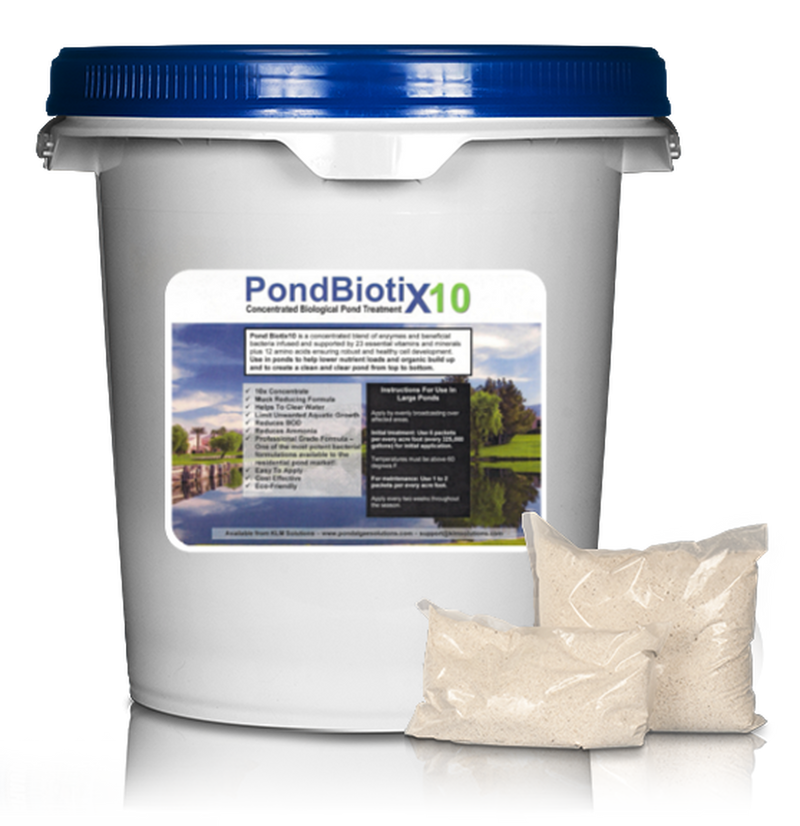
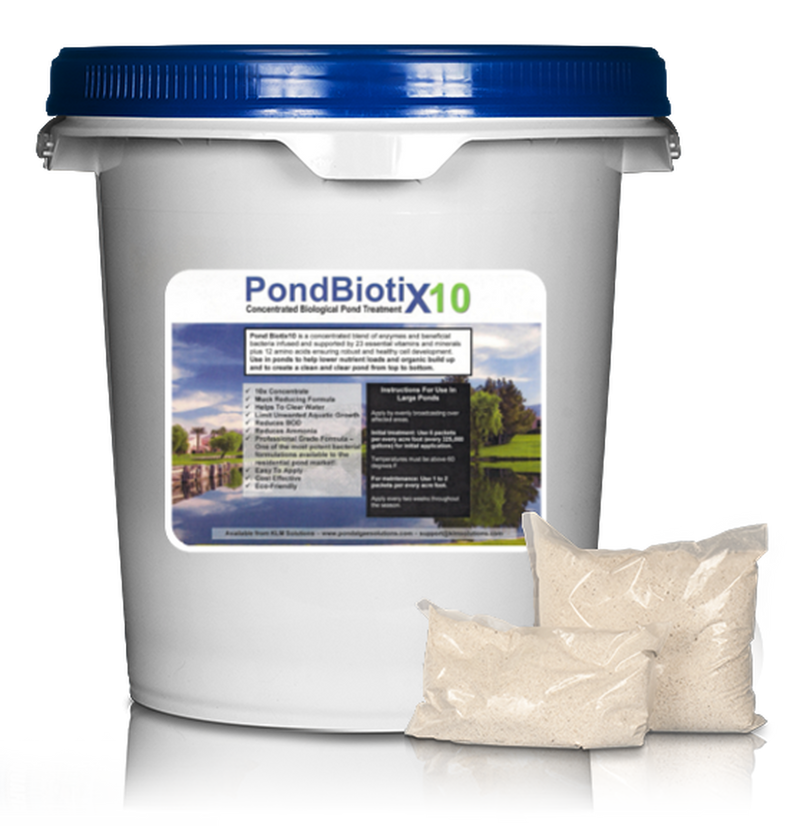
Step 2: Monthly application of a 10-lb blend of Bacillus-based muck pellets. Over a 20-week season, this targeted treatment can reduce the muck layer by 4-8 inches, removing tons of organic matter without the cost of mechanical dredging.
Step 3: Monitoring. The course superintendent tracks DO levels, ensuring they stay above 5 parts per million (ppm). Within 90 days, the high BOD is resolved, the odors disappear, and the water clarity increases from 2 feet to 6 feet of visibility. The cost of this biological program is often less than the cost of monthly algaecide applications and the eventual $50,000+ bill for mechanical dredging.
Final Thoughts
Shifting from a chemical-first to a biological-first approach in pond management requires a move away from reactive "firefighting" and toward proactive stabilization. By focusing on the fundamentals—dissolved oxygen, microbial diversity, and nutrient competition—superintendents can maintain water hazards that are truly crystal clear rather than artificially blue.
The data supports this transition: biological systems provide better long-term ROI, safer irrigation water, and a more prestigious aesthetic for the club's membership. A well-oxygenated pond with a healthy microbial population is a self-cleaning asset that reduces the burden on both the maintenance staff and the environment.
Experimenting with these systems often starts with a single "problem pond." Once the effectiveness of biological remediation is demonstrated through reduced sludge and increased clarity, it can be scaled across the entire course. The result is a more resilient, efficient, and visually stunning landscape that serves as a hallmark of professional golf course management.