

Algaecide vs. Beneficial Bacteria: Which Treatment Should You Use First?
Do you want to kill the symptom or cure the disease? The order matters. Using algaecide without beneficial bacteria is like vacuuming your house with the windows open during a dust storm. One kills the algae; the other eats the waste that causes it. Learn which one to reach for first.
Managing an aquatic ecosystem requires a precise understanding of chemical and biological interactions. Pond owners often face a choice between rapid chemical intervention and long-term biological stabilization. This technical analysis examines the mechanical and biochemical roles of algaecides versus beneficial bacteria in maintaining pond health and water clarity.
Systemic failure in pond maintenance typically stems from an imbalance in the nitrogen cycle or an accumulation of organic carbon. Algaecides provide a mechanism for immediate biomass reduction, while beneficial bacteria facilitate the metabolic breakdown of the nutrients that fuel growth. Choosing the correct sequence is critical for preventing dissolved oxygen (DO) crashes and sustaining a stable environment.
Algaecide vs. Beneficial Bacteria: Which Treatment Should You Use First?
The determination of whether to use algaecide or beneficial bacteria first depends on the current state of the pond's biomass and nutrient load. Algaecides are classified as pesticides by the EPA and are designed to provide rapid termination of existing algal cells. They are reactive tools used when visual growth exceeds acceptable thresholds for aesthetics or mechanical function.
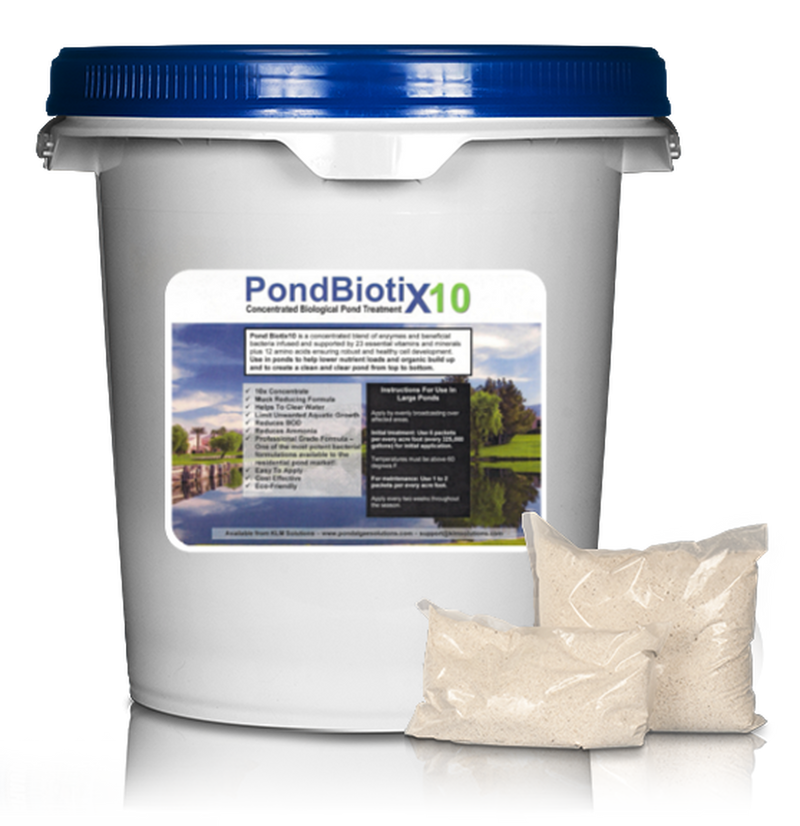
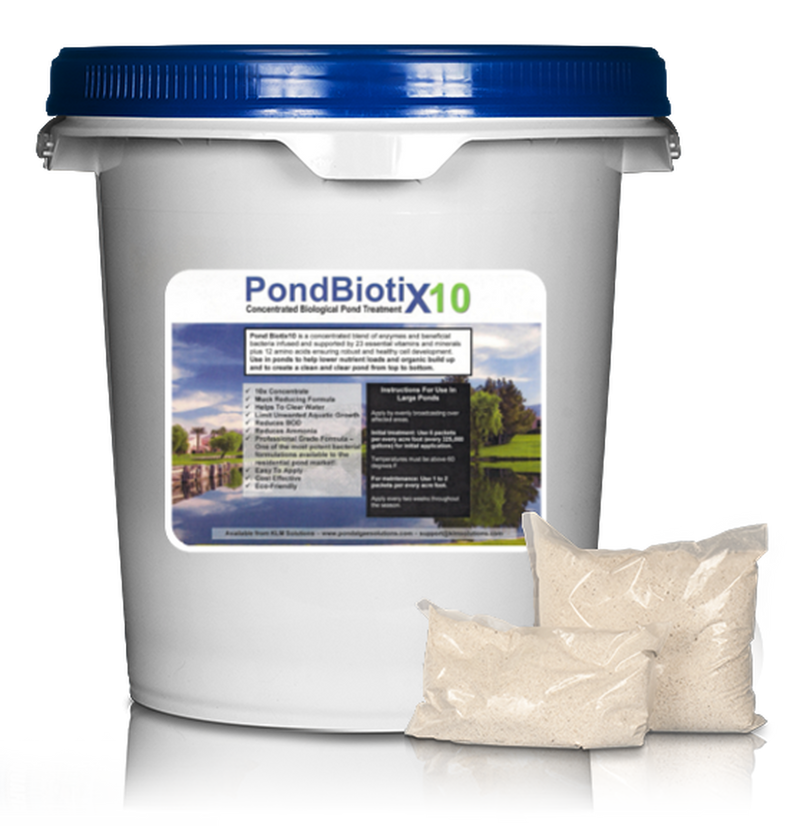
Beneficial bacteria, or bio-augmentation, represent a proactive management strategy. These consist of specific microbial strains, such as Bacillus or Nitrosomonas, that are introduced to metabolize organic sludge (muck) and inorganic nitrogen. In a real-world scenario, if a pond has an active, heavy bloom, applying beneficial bacteria alone will not provide immediate relief because the bacteria cannot outcompete a massive, established algal population for nutrients fast enough to kill it.
Conversely, applying an algaecide to a heavy bloom without a follow-up bacterial treatment creates a secondary problem. The dead algae sink to the bottom, adding to the "muck" layer and releasing phosphorus and nitrogen back into the water column. This nutrient release often triggers a "rebound bloom," where algae returns even more aggressively within days. Therefore, the standard technical protocol involves using algaecide to terminate the growth, followed by beneficial bacteria to digest the resulting dead biomass and sequester the released nutrients.
Mechanisms of Action: Chemical Oxidation vs. Microbial Metabolism
Algaecides operate through two primary chemical pathways: heavy metal toxicity or oxidation. Copper sulfate ($CuSO_{4}$), a traditional algaecide, releases $Cu^{2+}$ ions that disrupt cellular enzymes and inhibit photosynthesis. Chelated copper formulations use an organic "clamping" molecule to keep the copper ions in suspension longer, increasing efficacy in hard water where $CaCO_{3}$ would otherwise cause the copper to precipitate out of the water column.
Sodium carbonate peroxyhydrate (SCP) represents the oxidative approach. Upon contact with water, SCP disassociates into hydrogen peroxide ($H_{2}O_{2}$) and sodium carbonate ($Na_{2}CO_{3}$). The $H_{2}O_{2}$ provides an immediate oxidative strike, rupturing the cell walls of algae and cyanobacteria. The $Na_{2}CO_{3}$ component temporarily increases alkalinity and pH, which can be beneficial in acidic systems but requires monitoring in already alkaline environments.
Beneficial bacteria utilize aerobic respiration to break down complex organic compounds. The process of muck reduction involves the secretion of extracellular enzymes (cellulase, protease, lipase) that catalyze the hydrolysis of organic matter into simpler, water-soluble molecules. These molecules are then transported into the bacterial cell and oxidized, producing energy and releasing carbon dioxide ($CO_{2}$) and water ($H_{2}O$) as byproducts. Nitrifying bacteria, such as Nitrosomonas and Nitrobacter, focus on the conversion of toxic ammonia ($NH_{3}$) into nitrite ($NO_{2}^{-}$) and finally nitrate ($NO_{3}^{-}$), completing the nitrogen cycle and reducing the "food" available for algae.
Benefits of an Integrated Management Approach
The primary advantage of using algaecides is the speed of results. In systems where algae growth threatens to clog irrigation intakes or cause significant aesthetic degradation, chemical treatments can reduce biomass by 80-90% within 48 to 72 hours. This rapid reduction is essential for clearing the water column before starting a biological maintenance program.
Beneficial bacteria provide long-term efficiency by addressing the underlying cause of the bloom. Regular bio-augmentation can reduce organic muck accumulation by up to 6 to 12 inches per year, depending on the organic content and dissolved oxygen levels. This process, often called "biological dredging," increases the effective depth of the pond without the massive capital expenditure of mechanical dredging.
- Nutrient Sequestration: Bacteria compete with algae for phosphates and nitrates, effectively "starving" potential blooms.
- Sludge Volume Reduction: Microbial digestion converts solid organic waste into gas and liquid, reducing the anaerobic muck layer.
- Chemical Reduction: Consistent bacterial use reduces the frequency of required algaecide applications by 50% or more over time.
Challenges and Common Pitfalls in Application
A frequent error in pond management is the "over-treatment" of large blooms. When an algaecide kills a massive amount of algae simultaneously, the subsequent decomposition consumes massive quantities of dissolved oxygen. This process is driven by the Biochemical Oxygen Demand (BOD) of the decaying matter. If the DO levels drop below 2.0-3.0 mg/L, fish kills and the loss of existing beneficial microbial populations are likely.
Another challenge is the temperature dependency of beneficial bacteria. Most standard bacterial strains become dormant below 50°F (10°C). Applying warm-weather bacteria in early spring or late fall is a waste of resources, as their metabolic rates will be insufficient to process nutrients. Cold-water specific strains must be used during these shoulder seasons to maintain biological activity.
Copper toxicity in soft water is a significant concern for sensitive species like trout and koi. In water with alkalinity below 50 ppm $CaCO_{3}$, the toxicity of $Cu^{2+}$ ions increases significantly. The 48-hour LC50 (lethal concentration for 50% of the population) for fathead minnows is approximately 0.90 mg/L, but this can drop much lower in acidic or soft water environments. Accurate water testing is mandatory before any copper-based application.
Limitations and Environmental Constraints
Beneficial bacteria are not "magic erasers" and have realistic limitations. They are highly dependent on the presence of dissolved oxygen. In stratified ponds with an anaerobic bottom layer (hypolimnion), added bacteria will often fail to reduce muck because they cannot respire. Mechanical aeration is almost always a prerequisite for successful bio-augmentation in deeper ponds.
Inorganic silt, consisting of clay, sand, or mineral deposits, cannot be digested by bacteria. If a pond is filling in with runoff from a construction site or farm, biological treatments will have zero effect on the sediment depth. Bacterial treatments only work on organic matter—leaf litter, fish waste, and dead plants.
Environmental factors such as high flow-through rates also limit the effectiveness of both treatments. If a pond has a high turnover rate (replacing its volume every few days), the chemicals and bacteria are flushed out before they can act. In these situations, mechanical filtration or nutrient-binding agents like Phoslock may be more effective than biological or chemical additions.
Technical Comparison: Algaecide vs. Beneficial Bacteria
| Feature | Algaecide (Chemical) | Beneficial Bacteria (Biological) |
|---|---|---|
| Primary Goal | Rapid termination of existing growth | Nutrient reduction and muck digestion |
| Reaction Time | 24 - 72 Hours | 2 - 6 Weeks (establishment phase) |
| Oxygen Impact | High (Consumption during decay) | Moderate (Required for respiration) |
| Nutrient Effect | Releases nutrients from dead cells | Sequesters and removes nutrients |
| Persistence | Temporary (hours to days) | Self-replicating (with maintenance) |
| Cost Structure | High per-application cost | Moderate ongoing maintenance cost |
Practical Tips for Execution
Maximizing the efficiency of pond treatments requires precise timing and dosage. When using algaecide, treat only 1/3 of the pond's surface area at a time, waiting 7 to 10 days between sections. This strategy prevents the total BOD from exceeding the available DO, protecting the fish population and allowing the remaining healthy sections to act as a buffer.
Beneficial bacteria should be applied when water temperatures are consistently above 50°F. For maximum efficacy, distribute the bacteria near the pond's diffusers or aerators. The increased circulation and oxygen levels in these zones allow the bacteria to colonize more rapidly. Liquid bacteria formulations are better for addressing water column clarity, while pelletized "muck-reducer" versions are designed to sink into the sludge layer for targeted digestion.
Always perform a water hardness and alkalinity test before applying copper-based algaecides. If the alkalinity is below 50 ppm, consider using a peroxide-based algaecide instead. Peroxide-based products break down into water and oxygen, providing a safer profile for fish and a temporary "boost" to dissolved oxygen levels during the oxidation process.
Advanced Considerations: Stoichiometry and Metabolic Rates
The metabolic requirements of nitrifying bacteria are substantial. The oxidation of 1 mg of ammonia-nitrogen ($NH_{3}-N$) requires approximately 4.57 mg of dissolved oxygen. This high oxygen demand means that in a pond with high ammonia levels (e.g., from excessive fish waste or decomposing plants), the bacteria can actually deplete the oxygen levels they need for survival unless supplemental aeration is provided.
Furthermore, the nitrification process is an acidifying reaction. It consumes approximately 7.14 mg of alkalinity ($CaCO_{3}$) for every 1 mg of ammonia oxidized. In ponds with low buffering capacity, heavy bacterial treatments can lead to a pH crash. Monitoring carbonate hardness (KH) is essential for maintaining a stable environment for both the microbes and the larger aquatic life.
The efficiency of muck reduction is also tied to the "Respiratory Quotient" (RQ). Most aerobic bacteria have an RQ of roughly 1.0 when metabolizing carbohydrates, meaning they produce one molecule of $CO_{2}$ for every molecule of $O_{2}$ consumed. High-organic sediments (black muck) often contain 45% cellulose and 20% lignin. Since lignin is highly resistant to enzymatic breakdown, the "apparent" rate of muck reduction will slow down as the labile (easily digestible) organic matter is consumed, leaving behind the more recalcitrant materials.
Application Example: The "Rebound" Scenario
Consider a 1-acre pond with an average depth of 5 feet, containing 1.6 million gallons of water. An owner notices a heavy infestation of filamentous algae covering 40% of the surface. If they apply a heavy dose of copper sulfate to kill all the algae at once, they might kill 500 lbs of wet algae biomass. As this biomass decays, it will require roughly 750 lbs of oxygen for decomposition.
If the pond's DO is at a healthy 8.0 mg/L, the total available oxygen is only about 106 lbs. The resulting oxygen deficit is catastrophic. By instead treating only 1/4 of the pond (25 lbs of oxygen demand) and immediately adding a 3-billion CFU (Colony Forming Units) bacterial treatment, the owner allows the system to recover oxygen between treatments. The bacteria then sequester the nitrogen released by the dying 1/4 of the algae, preventing it from fueling a bloom in the remaining 3/4 of the pond.
Final Thoughts
Successful pond management is a balance of rapid chemical control and sustained biological health. Algaecides are high-performance tools for symptom suppression, while beneficial bacteria are the biological engines that drive nutrient recycling and waste removal. Using them in isolation often leads to a cycle of chemical dependence and ecological instability.
The data-driven approach requires starting with an assessment of the nutrient load and biomass. Integrated Pest Management (IPM) strategies suggest using algaecide for immediate correction, followed by aggressive bio-augmentation to address the resulting nutrient spike. This sequence ensures that the "disease"—excessive nutrient loading—is treated alongside the "symptom" of algae growth.
Experimentation with different bacterial strains and application timings will help refine the maintenance protocol for any specific body of water. Serious practitioners should focus on maintaining high dissolved oxygen levels and adequate alkalinity to support the microbial populations that provide the most efficient, long-term cleaning service for any aquatic system.